AI agent for customer support at an investment management software company
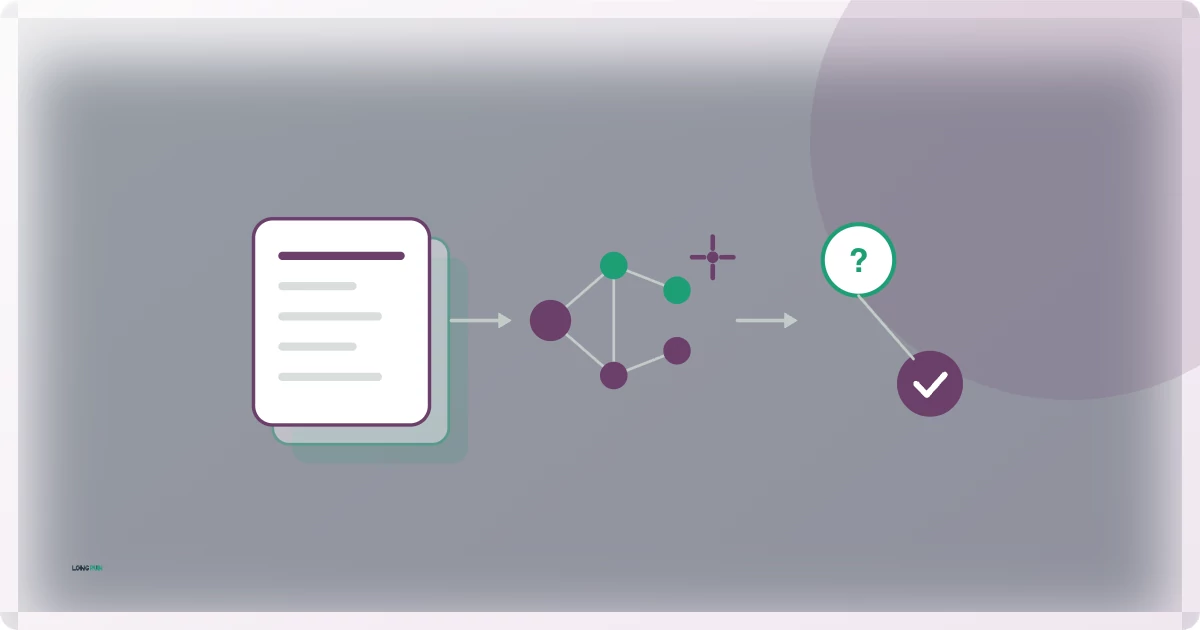
In investment management, support teams answer questions about a complex system every day. The answers live in documentation, screenshots and code. We built an AI agent that finds that information in seconds and gets better every time the knowledge base grows.
Challenge
Our client builds, deploys and maintains software for investment management. It is a fintech product with many modules, rules and scenarios. The support team handled questions from both customers and internal staff. Most answers existed, but they were scattered. Some lived in documentation, some only in one person's head, others were buried in feature descriptions or fragments of code.
The outcome was predictable. New hires took a long time to get up to speed. Experienced specialists wasted hours hunting for things they knew were somewhere. The same questions came back again and again. The client wanted an AI agent that could answer questions about the system using real documentation, help the support team find information faster, and that could be trained simply by adding to the knowledge base.
Solution
We built an AI agent grounded in the client's own documentation. The foundation is meaning based search. The agent does not look for matching words alone. It understands the intent of a question and finds the right content, even when a user phrases things differently than the documentation does.
We assembled the knowledge base from several sources. We included text documentation, feature descriptions, screenshots and selected parts of the code. Every answer is tied to a specific source, so the agent shows where the information came from. That matters in fintech. A support specialist sees the basis and can check the original text instead of trusting blindly.
We designed the agent to improve by adding content, not by rebuilding the system. When the team adds a new screenshot, a feature description or a code fragment, the agent picks up that material automatically. Training becomes part of daily work, not a separate project. The more knowledge it holds, the more accurate the agent becomes.
We created two paths from the same knowledge base. The internal path serves the support team. It gives more technical answers, shows code references and internal detail. The customer path serves end users. It speaks in plainer language and stays within what can be shown externally. One base, two tones.
We paid special attention to staying within bounds. If an answer is not in the knowledge base, the agent says so instead of making something up. In investment management, an invented answer costs more than an honest gap. We tuned that behavior on purpose, so trust grows rather than breaks.
We wrapped all of this in a simple interface. A support specialist asks a question in normal language and gets an answer with sources. No browsing folders, no remembering which document holds what.
Result
The agent is live and used every day. The support team finds answers faster and spends less time digging through old files. New hires get up to speed sooner, because the agent becomes the first place they ask. Repeating questions are handled instantly, so experienced specialists can focus on the hard cases.
The knowledge base grows naturally. Every new description or screenshot makes the agent smarter, and the team adds that material without us in the loop. Source citations and honest answers built trust among the support specialists, so the tool became a natural part of the work rather than another system someone has to be pushed to use.
For us, this project showed how artificial intelligence and focused automation reshape support work at a fintech company. A well built AI agent does not replace people. It gives them fast access to everything the company already knows.
Similar challenges in your company?
Write to us and we will discuss how we can help.